Clevelandurbannews.com, Ohio's Black digital news leader

Breaking news from Cleveland, Ohio from a Black perspective.©2025

Fri01022026

Last update05:10:33 am

Font Size

Profile

Menu Style

Cpanel

Clevelandurbannews.com, Ohio's Black digital news leader-News from a Black perspective

01234567891011121314

Example of Section Blog layout (FAQ section)

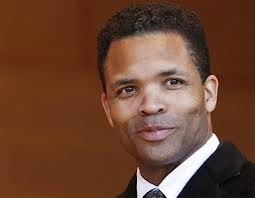
Former congressman Jesse Jackson Jr., his wife both sentenced to prison, Jackson weeps at sentencing, asks judge if he could serve his wife's sentence in addition to his own, Rev. Jesse Jackson Sr attends sentencing

  • PDF

By Kathy Wray Coleman, Editor, Cleveland Urban News. Com and The Kathy Wray Coleman Online News Blog.Com, Ohio's No 1 and No 2 online Black newspapers (www.kathywraycolemanonlinenewsblog.com) and (www.clevelandurbannews.com). Reach us by phone at 216-659-0473 and by email at editor@clevelandurbannews.com


WASHINGTON, D.C.-Former U.S. Rep. Jesse Jackson Jr. (D-IL) (pictured) and his wife Sandra, a former Chicago City councilwoman, were sentenced  on Wednesday to 30 months and a year in federal prison respectively after Jackson, a son of former presidential candidate and Civil Rights icon the Rev. Jesse Jackson Sr, pleaded guilty earlier this year to misuse of $750,000 in campaign funds and his wife to filing false tax returns.


The couple, who arrived in court yesterday morning arm and arm, has two children. He resigned his congressional seat last year, and she, her seat on city council.


Jesse Jackson Jr,. 48,  spent the money on a high priced lifestyle,  fancy clothes, lavish vacations and a $43,000 Rolex watch, court documents reveal. He will serve his sentence first, and was remorseful at sentencing.


"Today I manned up and tried to accept responsibility for the errors of my ways and I still believe in resurrection " said Jackson , the son of a Baptist preacher.


Jackson Jr. pleaded with federal district court Judge Amy Berman to let him serve his wife's sentence in addition to his own, an emotional courtroom scene before his father and others,  but to no avail.


The judge did not take into account his claim of bi-polar disease as a reason for his behavior, though the former lawmaker, who wept noticeably before the judge, spent four months in the hospital for it, his lawyers said.


President Barack Obama, a former U.S. senator from Illinois and friend to Jesse Jackson Jr., who was his 2008 presidential campaign national co-chairperson, did not immediately release a statement.


The fall from grace of  a son of one of the nation's most prominent Civil Rights activist next to the Rev. Al Sharpton has stunned America's Black community.


Rev. Jackson did not release a statement after sentencing  or even speak  but so much to reporters after watching his son get sentenced to prison but did say to reporters that it was an "extraordinarily difficult time."


The elder Jackson said last year when Jesse Jackson Jr. entered the hospital for bi-polar disorder that his family stands by him.


"We are with him and we hope that he'll be fully restored to his health," Rev. Jesse Jackson Sr. told NBC Chicago’s Stefan Holt. "Right now he is going through a tremendous challenge."


Last Updated on Thursday, 15 August 2013 12:09

Cleveland Councilman Zack Reed to testify August 16 in his DUI trial before retired, handpicked visiting judge Larry Allen, communty activists say Allen was handpicked by Ohio Supreme Court Chief Justice Maureen O'Connor to unfairly dictate case outcome

  • PDF

From the Metro Desk of Cleveland Urban News.Com


CLEVELAND, Ohio- The DUI trial of Democratic Cleveland Ward 2 Councilman Zack Reed (pictured) began today in Cleveland Municipal Court before retired visiting Willoughby, Oh. Judge Larry Allen and Reed, 51, will take the stand in his own defense Friday morning, his lawyer Kevin Spellacy told the judge at the onset of the jury trial.


Spellacy argued at trial today that city lawmaker was set up by Cleveland police, who allegedly waited for him in downtown Cleveland hours after a Monday evening city council meeting  just to hope to pull his Black BMW over.


Reed, debonair,  Black, and single, would, the day of the incident earlier this year, and at other times, frequent downtown nightclubs. If convicted a third time of DUI, he faces up to six months in jail, a $350 fine, and a licence suspension. He was ticketed, say police, for running a red light and making an improper turn, citations in addition to the DUI that he also pleaded not guilty too.


Prosecutors paraded police witnesses before the judge at trial today and said that Reed failed a sobriety test, though Spellacy argues that the police stop and all that happened afterwards will prove that his client must be cleared.


Willoughby Judge Larry Allen was handpicked to sit in Cleveland to hear the current case by Republican Ohio Supreme Court Chief Justice Maureen O'Connor, something community activists say potentially deters from a necessary due process, random draw procedure and that opens the door to potential judicial case fixing and unfair case outcomes.


"This out-of-the area retired visiting  judge, who could, with all due respect,  have age- related case assessment problems, was handpicked out of  Lake County and not Cuyahoga County for a reason and it could very well be to make sure that this Black male Cleveland city lawmaker is railroaded into prison for political reasons, and as community activists we are tired of the impropriety that plagues Ohio's legal system to the detriment of women, poor people and the Black community" said Community Activist Kathy Wray Coleman, who leads the grassroots group Imperial Women. "We again call on Ohio state legislators, Black leaders, and the Cleveland NAACP to join us in supporting House Bill 216 and urging the Ohio General Assembly in adopting it into state law."


A bill sponsored by state Rep. Bill Patmon (D-10), HB 216, still in committee though introduced over two years ago, would require that all Ohio trial court judges in multi-judge courts are at all times assigned and reassigned to both civil and criminal cases at random.


Community activists say that a random draw judicial case assignment bill would serve to minimize public corruption in the judicial arena by judges in Ohio trial courts.


How HB 216, which Patmon drafted at the request of Imperial Women and some other community activists groups, would stop chief judges of municipal courts like Judge Ron Adrine in Cleveland, and of common pleas courts, like Chief Judge Nancy Russo of the Cuyahoga County Court of Common Pleas, from handpicking judges.  Ordinarily the judge is assigned initially by random draw computer but when the judge withdraws or is disqualified from hearing  a civil or criminal case Adrine and Fuerst would often  handpick a replacement at will, data show.


At other times the Ohio Supreme Court chief justice, now O' Connor, will do the handpicking reassignment technique. While the Ohio Constitution gives authority to the chief justice of the Ohio Supreme Court to reassign judges to cases, and to initially assign them too, the former usually occurs when the initial judge is disqualified or voluntarily withdraws from hearing the matter.


The Ohio Constitution does not explicitly say one way or another that  the judicial replacement assignment can be by personal choice of the chief justice, and O'Connor is enjoying picking and choosing retired judges up a storm, some of whom are selected all the time by favoritism, an investigation reveals. And they can make $500 or more daily to sit in on a case, a hefty sum to supplement a  decent public pension.


Why Chief Justice O'Connor did not assign Reed a sitting judge from a suburban municipal court of greater Cleveland such as in Shaker Hts or Lyndhurst also lends credence to the suggestion by community activists that the fix might be in against the Black brother.


Sometimes O' Connor handpicks sitting judges to replace judges disqualified from hearing cases, rather than assigning a retired insisting judge like she usually does, a process used interchangeably,  also potentially for political reasons, data will show.


In addition to HB 216 that,  if it becomes state law, would mandate that chief municipal and common pleas trial judges assign and reassign all judges at random Imperial Women and some other community activist groups such as Black on Black Crime and Stop Targeting Ohio's Poor want a constitutional amendment too that mandates random draw assignments and reassignments to cases when the chief justice assigns them, or reassigns them. This, say activists, would serve to help put an end to the handpicking  process by O' Connor and her successor chief justices, though regardless, state law does require that retired visiting judges assigned by O' Connor or anyone else come from the territory of the court.


Willoughby, Ohio is a Lake County municipality unlike Cleveland, a city of Cuyahoga County, and it is not within the territory  defined by statute or state law . Hence,  Judge Allen by the chief justice violates state law, some might argue.


"We would urge Reed's attorney to demand a judge assigned at random that is within the territory of the court as state law demands, unless he has waived that challenge for one reason or another by failing to do so for his client Councilman Reed prior to trial" said Coleman, who is also a longtime investigative journalist who publishes Cleveland Urban News/Com, Ohio's most read online Black newspaper.


The original judge in the current DUI case, Cleveland Municipal Court Judge Pinkey Carr, withdrew saying Reed had contributed money to her campaign for judge, and the 11 other regular judges of that court, led by Chief Judge Adrine, refused to hear the case too, all of them saying, through Adrine, that because city council approves the municipal court budget that that it is a conflict.


But data suggest that that move to keep from hearing the controversial DUI case, aside from Carr who may have sought to deter critics since she won her seat by unseating former Cleveland Municipal Court Judge  Lynn McLaughlin Murray, may have been premature, if not unconstitutional.


Had Reed sought their recusal or withdrawal by filing an affidavit of prejudice under state law (Ohio Revised Code 2701.031) with Chief Cuyahoga County Judge Nancy Russo, she would have likely denied it, research suggest.  Moreover, case law rulings by the Ohio Supreme Court on affidavits of prejudice filed to remove judges gives them a presumption of fairness to impartially preside over cases absent a legitimate conflict.


While affidavits of prejudice filed under state law to seek disqualification of Ohio municipal court judges are heard by the chief or presiding judges of common pleas courts, which in Cuyahoga County is Judge Fuerst, the affidavits filed with respect to seeking the disqualification of common pleas judges that hear felony and other matters rest with the chief justice of the Ohio Supreme Court, also under state law (Ohio Revised Code 2701.03).


Coleman says that data show that the retired visiting judges often do try to fix cases and are sent throughout the state to various courts such as Berea Municipal Court to help Berea Judge Mark Comstock harass Blacks, outspoken community activists and others that some politicians or dishonest judges may not like.


Reed is facing his third DUI case. The first case, under then Cleveland Municipal Court Judge Joan Synenburg, now a common pleas judge, did not get him jail time but the second case did. His attorney the second time around, well  known Black Cleveland lawyer George Forbes, did not object to prosecutors charging Reed with DUI when he was not driving his car, nor did police witness him driving, court documents denote.  That guilty plea got Reed 10 days in jail by  retired visiting judge Mary Trimboli, who was sent in by the Ohio Supreme Court Chief Justice Eric Brown, who lost the seat to O' Connor, a former Ohio Lt. governor.


And Triboli is not even a retired judge as dictated by the Ohio Constitution because she was too young at then 51 to not seek reelection to the Toledo Municipal Court bench. Data show also that she is an alleged henchman assigned to municipal courts throughout Ohio, sometimes to manipulate case outcomes and to harass defendants in some maliciously prosecuted over free speech issues.


One of nine Black councilman on the 19-member Cleveland City Council, absent the recent retirement of Councilman Jay Westbook, Reed represents the impoverished predominantly Black Mount Pleasant and Kinsman neighborhoods on Cleveland's largely Black east side. He is seeking reelection this year.


Reed fired his previous lawyer in his latest DUI case, Cleveland Attorney Anthony Jordan , a former Chief  City Prosecutor who supervised the current one, Victor Perez.


Cleveland Mayor Frank Jackson, up for reelection this year too, has no appointed Blacks as law director, safety director, chief of police, chief city prosecutor or EMS Commissioner in the major American city where Blacks, Black men in particular,  are disproportionately prosecuted and sentenced.


How the lack of diversity of the Black mayor's law enforcement leadership team impacts plea deals involving Blacks and other people of color has not been publicized.


Last Updated on Friday, 16 August 2013 21:09

Greater Cleveland Black clergy call Prosecutor Tim McGinty racist for not seeking charges against White Cleveland cops that gunned down 2 unarmed Blacks with 137 bullets, remark made at rally for help from Obama, Governor Kasich on epidemic of violence

  • PDF


By Kathy Wray Coleman, Editor, Cleveland Urban News. Com and The Kathy Wray Coleman Online News Blog.Com, Ohio's No 1 and No 2 online Black newspapers

(www.kathywraycolemanonlinenewsblog.com) and (www.clevelandurbannews.com).


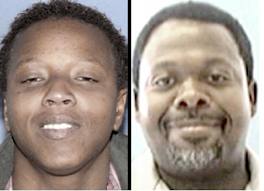
CLEVELAND, Ohio- The United Pastors in Mission, the Baptist Ministers Conference, the Mount Pleasant Ministerial Alliance, East Cleveland Concerned Pastors for Progress, Black elected officials, Cleveland NAACP Executive Director Sheila Wright,  family members of rape and murder victims, and community activists gathered  on August 2 for a well attended press conference, balloon launch and rally in East Cleveland that drew Cleveland news television stations, 3, 5, 8, and 19 and the Call and Post Newspaper, an event billed as a stop the violence against women rally. But the gathering suddenly took an unexpected turn as greater Cleveland Black clergy, led by Greater Love Missionary Baptist Church Bishop Eugene Ward Jr. (pictured), called out Cuyahoga County Prosecutor Tim McGinty (pictured) as a police prosecutor who promotes White women victimized by violence while ignoring similarly situated Black women, and who allegedly protects White Cleveland cops that gun down unarmed young Black women with a hail of 137 bullets.


"We remember that the police endorsed you Mr. McGinty and we will not go away," said Bishop Ward, referencing support for McGinty's campaign last year for county prosecutor by the Cleveland police union, and police murder late last year by 13 Cleveland cops of unarmed Blacks Malissa Williams and Tim Russell. (both pictured) (Editor's Note: Read more heated quotes from Bishop Ward later on in this article from Cleveland Urban News.Com, Ohio's most read online Black newspaper).


The rally event highlighted violence against non-Black women Gina DeJesus, Amanda Berry and Michelle Knight by convicted rapist and kidnapper Ariel Castro at his home on Cleveland's west side, the 11 Black women murdered on Imperial Avenue by serial killer Anthony Sowell on the city's largely Black east side, and the recent murders of  Black women Angela Deskins, Sherellda Terry, and Lateshia Sheeley. Their decomposed remains were found wrapped in garbage bags, all 3 bodies found in or around vacant buildings near the intersection of Shaw and Hayden Avenues in East Cleveland, and their murders allegedly at the hands of accused serial killer Michael Madison.


The family of Sheeley, including her mother, was there, and prayed with the community. It was a sad affair, but it also had uplifting speakers and a coming together of the Black community.


Imperial Women, an activist organization and organizing group for the rally, among other groups, and other activists groups, including Black on Black Crime Inc, Audacity of Hope Foundation, the Carl Stokes Brigade, and Revolution Books, demanded federal and state assistance relative to the epidemic of violence against women in greater Cleveland. Black clergy, through United Pastors in Mission Executive Director The Rev. Tony Minor, joined community activists in calling on President Obama and Ohio Gov. John Kasich to bring in necessary resources to curb the tide of violence against women in the majority Black cities of Cleveland and East Cleveland.


Then it was on where Bishop Ward, a popular long time pastor at Greater Love Missionary Baptist Church in Cleveland and a member of the United Pastor's in Mission and the Mount. Pleasant Ministerial Alliance , lit into McGinty, who did not attend the rally.


Ward was supported though by activists and others at the rally, particularly fellow Black clergy.


"Prosecutor McGinty you have been more than visible and larger than life as it pertains to Ariel Castro and have held press conferences and sat at the table for verdicts and sentencing," said Bishop Ward at the rally. "But what about the 13 exterminators that blatantly took the life of Malissa Williams along with Timothy Russell? When do you bring these professional hoodlums to justice?"


That episode, which culminated in 137 rounds of ammunition shot by Cleveland police at Williams, 30, and the driver of the car, Russell, 43, followed a car chase that began late last year in downtown Cleveland and ended in neighboring East Cleveland. It has caused racial unrest in the two impoverished communities, both among the cities of Cuyahoga County, Ohio's largest.


The 13 police officers at issue have not been charged and are still on the job as if nothing has happened.


McGinty, 62, is a crafty White Democratic politician that people in general either love or love to hate who has some inroads to the Black community through a few Black leaders and a handful of Black elected officials , and the Cuyahoga County Democratic Party. He has reluctantly refused to seek a  possible Cuyahoga County Grand Jury indictment against the 13 White cops that killed Russell and Williams and has, during the Ariel Castro case and otherwise, publicly, and via press conferences, commended Cleveland police and the Cuyahoga County Sheriff's Office. And he has used employees from his office like Lilly Miller to call Blacks "nigger" on the Internet and to demand that they be hanged if they complain about him, and will also allegedly harass them further through Cuyahoga County Common Pleas Judge Brian Corrigan, a drunk on the bench who just this year was convicted of DUI.


McGinty is a former common pleas judge himself who was elected for the first time just last year, and after Bill Mason resigned to become a partner with the Cleveland based office of the law firm of Bricker and Eckler.


A popular Democrat too, Mason left the county prosecutor's office after two terms, and toward the end of the second one. He left amid conclusion of a  county public corruption probe spearheaded by the FBI and  pushed by the Plain Dealer Newspaper, and Republicans, one that targeted Democrats, and rightfully so in many instances, some said, but not to the extent that county Republicans have been squeaky clean. And that probe netted prison for some of the more than 60 of them that, among others, were mainly businessman, two former common pleas judges, and former county commissioner Jimmy

Dimora and former county auditor Frank Russo, both once powerful with the county Democratic party.


Dimora is serving what some say is a prejudicial  28 -year sentence on racketeering convictions and a host of other federal charges. A few others believe the popular Dimora, a former Bedford Heights mayor and one time chair of the Cuyahoga County Democratic party,  got what he deserved.


A assistant county prosecutor and common pleas judge for nearly 17 years before he was elected to county prosecutor , McGinty was probably the most controversial on the 34-member predominantly White Cuyahoga County Court of Common Pleas bench.


But the cops have influence too, particularly the Cleveland Police Patrolmen's Association, which is led by controversial president Jeffrey Follmer, a strong union head, and a deviant one if it is necessary to protect the interests of the larger membership.


But that did not stop greater Cleveland's Black clergy from taking on Cleveland police at the East Cleveland August 2 violence against women rally, though police from neither Cleveland nor East Cleveland were there


"What about the 13 murders, what about the 13 killers,?" asked Bishop Ward at the rally. "Those 13 officers should be riding with Sowell, Castro and Madison for the injustice done."


Black elected officials in attendance at the rally include East Cleveland City Council President Dr. Joy Jordan,  East Cleveland Councilman Nate Martin, and Cleveland Ward 6 Councilwoman Mamie Mitchell.


Other Black Clergy there include Baptist Ministers Conference President David Hunter, who is pastor of Bright Star Missionary Baptist Church in East Cleveland, East Cleveland Concerned Pastors for Progress  President Shawn Braxton, who is pastor of New Life Cathedral Church in East Cleveland,  and the Reverends Henry Gates and Aaron Phillips.


Activists that rallied include Kathy Wray Coleman, Art McKoy, Khalid Samad, Al Porter, Ada Averyhart, Amy Hurd, Donna Walker-Brown, Richard Peery, Charlie Bibb, Griot Y-Von, the Rev.  Pamela Pinkney, Willie Stokes, Patricia Rowell, Bill Swain, and Dr. Stewart and Valerie Robinson.


Last Updated on Tuesday, 13 August 2013 20:09

FCC bars high rates for long distance phone calls in jails, prisons nationwide, CBC, Congresswoman Fudge applaud it, Blacks and Black men in particular are disproportionately imprisoned nationwide by America's unjust and racist penal system

  • PDF


Washington, D.C. – The Federal Communications Commission (FCC) this week took long-overdue steps to ensure that the rates for interstate long-distance calls made by prison inmates are just, reasonable and fair. U.S. Rep. Marcia L. Fudge (pictured) of Ohio, who also chairs the Congressional Black Caucus of Blacks in Congress, applauded the decision.

"I'm pleased that the FCC has finally addressed a great injustice by issuing regulations to ensure prison telephone rates are reasonable and fair," said Fudge in a press release to Cleveland Urban News.Com, Ohio's most read online Black newspaper.

"I thank the many citizens in Ohio and throughout the nation who joined the effort to press for change, " added Fudge, a Warrensville Hts. Democrat whose predominantly Black 11th congressional district includes the largely Black city of Cleveland and a majority Black pocket of Akron, a city some 30 miles south of Cleveland.

Research studies reveal  that inmates who maintain contact with family and community while in prison, a disproportionate number of them of whom are Black, and Black males in particular, have reduced rate of recidivism and are more likely to become productive citizens upon their release.  Lower rates of recidivism also benefit society by reducing crime, the need for additional prisons, and other costs.

In addition, an estimated 2.7 million children would benefit from increased communication with an incarcerated parent. Many of these children face challenges that are manifested in higher rates of truancy, homelessness, depression and other ills

But the exorbitant price of interstate long-distance calls from correctional facilities today actually discourages such communication because it is too expensive (over $17 for one 15-minute call), particularly for families facing economic hardship.  The FCC order takes immediate action to change this and provide an affordable means to encourage such communication.

The Commission’s reforms adopt a simple and balanced approach that protects security and public safety needs, ensures providers receive fair compensation while providing reasonable rates to consumers as follows:

·        Requires that all interstate inmate calling rates, including ancillary charges, be based on the cost of providing the inmate calling service

·        Provides immediate relief to exorbitant rates:

o   Adopts an interim rate cap of $0.21 per minute for debit and pre-paid calls and $0.25 per minute for collect calls, dramatically decreasing rates of over $17 for a 15-minute call to no more than $3.75 or $3.15 a call

o   Presumes that rates of $0.12 per minute for debit and prepaid calls ($1.80 for a 15-minute call) and $0.14 cents per minute for collect calls ($2.10 for a 15-minute call) are just, reasonable and cost-based (safe-harbor rates)

o   These rates include the costs of modern security features such as advanced mechanisms that block calls to victims, witnesses, prosecutors and other prohibited parties; biometric caller verification; real-time recording systems; and monitoring to prevent evasion of  restrictions on call-forwarding or three-way calling

·        Concludes that “site commissions” payments from providers to correctional facilities may not be included in any interstate rate or charge

·        Clarifies that inmates or their loved ones who use Telecommunications Relay Services because of hearing and speech disabilities may not be charged higher rates

·        Requires a mandatory data collection, annual certification requirement, and enforcement provisions to ensure compliance with this Order

·        Seeks comment on reforming rates and practices affecting calls within a state

·        Seeks comment on fostering competition to reduce rates

Building on state reforms, the commission’s action addresses a petition filed nearly a decade ago by Martha Wright, a Washington, D.C. grandmother who sought relief from exorbitant inmate calling rates.  Since then, tens of thousands of people have urged the FCC to make it possible for them to stay in touch with loved ones in jail or prison.


Last Updated on Sunday, 11 August 2013 23:31

Cleveland Urban News.Com Sportswriter Karl Kimbrough assesses Cleveland Browns owner Jimmy Haslem and new head coach Rob Chudzinski

  • PDF


By Karl Kimbrough (pictured), Cleveland Urban News.Com Sportswriter. Reach Kimbrough at kimbrough@clevelandurbannews.com. Cleveland Urban News. Com and The Kathy Wray Coleman Online News Blog.Com, Ohio's No 1 and No 2 online Black newspapers (www.kathywraycolemanonlinenewsblog.com) and (www.clevelandurbannews.com).


CLEVELAND, Ohio-Last year at about this time during training camp Jimmy Haslam suddenly appeared on the scene of Browns Town as the team's new owner. He would immediately begin to patrol the side lines in Berea, Ohio where the team practices. By his mere presence on a consistent basis in contrast to previous owner Randy Lerner, fans, players and management know there is a new sheriff in town. By his optimistic expectation to establish a winner, Haslam has reinvigorated Browns fans.


So when the season 5-11 record drew to a merciful end last year and Haslam began to work his magic, fans did not have to wonder if changes would be made, they just had to access just who and how many would be changed.


Haslam moved into action swiftly with his new CEO Joe Banner in tow  and they relieved head coach Pat Shurmur of his duties, and almost his entire staff too. But did the new sheriff jump the gun by firing Shurmur and most of his staff? Did Haslam bring in the right deputies to coach his team?


Looking back in retrospect at the beginning of the 2012 season and even in training camp, Shurmur and his team were destined to struggle early and often. In the NFL these days the sun rises and sets with each team riding the shoulders of their quarterback . It is a quarterback driven league, and many of the rules shade the game in favor of the offense.


Drafting quarterback Brandon Weeden in the first round in 2012 meant that Mike Holmgren, who was president of the Cleveland Browns from 2010-2012, was looking to lean on his strong arm to take them into the future. However, Weeden's best asset in college was throwing accurately deep down field from the shot gun formation. Not then and certainly not now was he known for taking a lot of short three step drops from under center and linking short passes to receivers crossing the field.


The type of scheme that an offense runs should be in harmony with the skill set of the quarterback.  Shurmur and the Browns staff were resolute in transforming Weeden into a West Coast quarterback . But during the exhibition or pre-season games, Weeden only played an average of one and a half quarters the first three games and not at all in game four.


If you are going to get a rookie quarterback  ready for the season then he needs to play at least into the second half of each game to get acclimated to play with new receivers and the speed of the game. Shurmur was more interested in giving his second and third teams playing time than trying to figure out who his last five or six roster spots would go to.


A big mistake that showed in game one of the regular season against the Eagles last season was when Weeden threw four interceptions in that game and many of his other passes were nowhere near the receiver. Weeden looked like a foreigner driving on a New York city freeway for the first time. He didn't know which way to go with the ball, and everything was coming to fast and furious. He would finish the game with a quarterback  rating in single digits. This inauspicious beginning would get better, but Weeden would never look or feel comfortable in the “ West Coast Offense.” He would have 23 passes batted down by linemen after a three step drop. Also, Shurmur put him in the shot gun more and more as the season went on. As a result, Weeden threw more touch downs (8) from the shot gun than from under center (6). This is even though he took 75 more snaps from under center than in the shot gun.

Weeden also rarely threw deep down field. Certainly Weeden needs to show more consistently and improve his ability to read defenses. But coaches need to put their players in the best position to win or be successful and Shurmur and his offensive staff clearly did not do that. Some will say it was only one season last year that Shurmur had to transform Weeden into a “West Coast” quarterback. But in Cleveland we don't have time for that. Going forward would be to hire another young first time head coach be the right move, or would it?  In comes Rob Chudzinski for this season to lead the Browns team. After Haslam brought in Rob Chudzinski as his new head coach you could hear a loud “oh no” around Browns Town.


Chudzinski was a relative unknown head coaching prospect who had previously served as a Browns offensive coordinator in 2007 and in 2008 before going to San Diego. In 2011 he joined the Carolina Panthers and took the team from one of the worst offenses in 2010 to one of the top offenses in 2011. But no one saw this new hire coming to Cleveland.


The fact that Chudzinski had great success mentoring young quarter backs such as Cam Newton, a star quarterback for the Carolina Panthers, had to play a part in Banner and Haslam's decision. As mentioned earlier, this is a quarterback driven league. But the significance of the head coach and coordinators are high on the list of importance as well.


Chudzinski will only need to manage the team and keep them humbly motivated. The rest of the Browns regime will find its easier to put a round peg in a round hole.


Last Updated on Thursday, 08 August 2013 23:08

Ads

Our Most Popular Articles Of The Last 6 Months At Cleveland Urban News.Com, Ohio's Black Digital News Leader...Click Below

Latest News